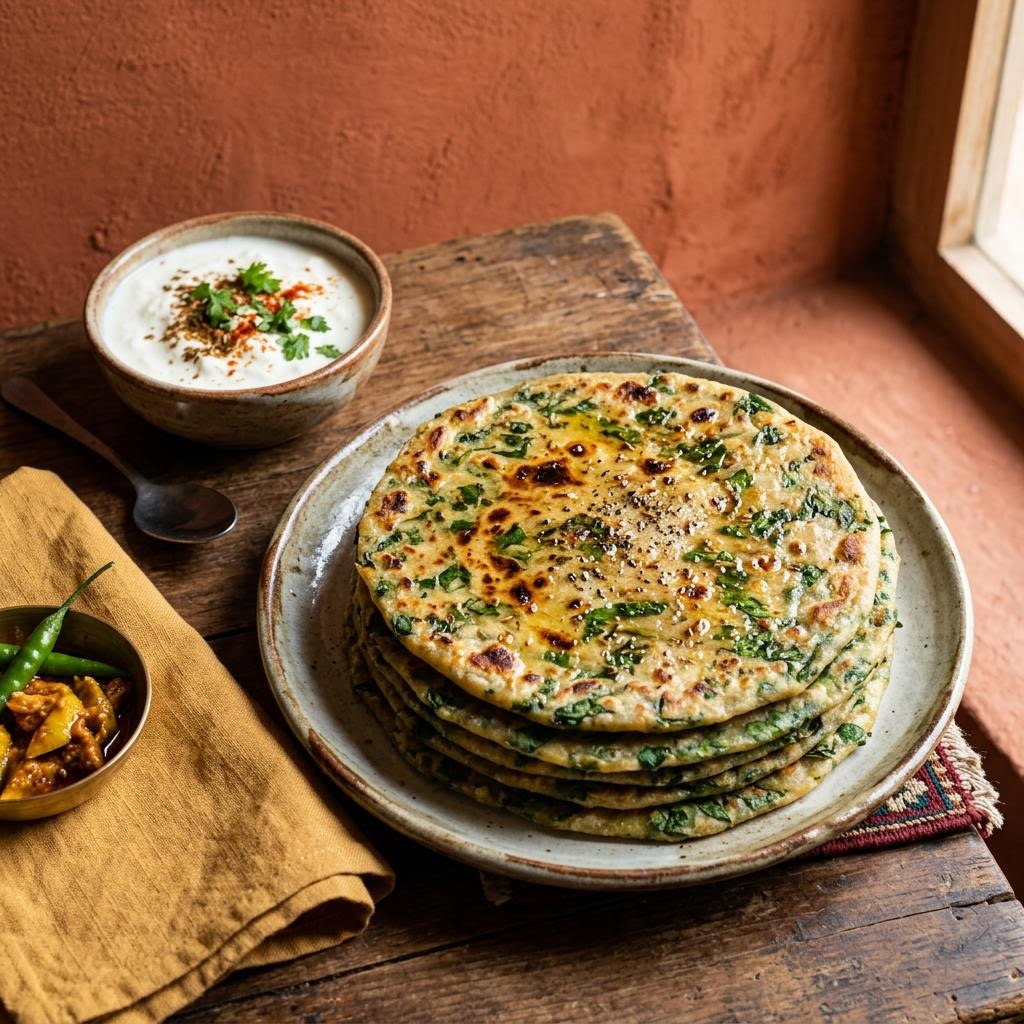
Seven mornings, with room to swap
Cook only what you need each morning, or reheat a safely stored portion. Each menu pairs a paratha with a simple accompaniment rather than requiring a large spread.
- Monday: mooli paratha with plain dahi and a little achar. Squeeze the grated radish just before filling.
- Tuesday: methi paratha with a fully cooked omelette, or dahi if you prefer an egg-free breakfast.
- Wednesday: gobi paratha with green chutney or dahi. Grate the cauliflower finely so the dough rolls evenly.
- Thursday: matar paratha with chai and plain dahi. Cook the pea filling dry and cool it before stuffing.
- Friday: palak or bathua paratha with a small serving of saag. Use familiar, properly identified edible greens.
- Saturday: aloo paratha with dahi and a little makhan if you enjoy it. Mash the potato without lumps.
- Sunday: mix sabzi paratha with achar and chai. Use the recipe's measured vegetable mixture rather than adding wet leftovers at random.
Shop for overlapping ingredients
Atta, ginger, coriander, cumin, plain dahi and a cooking fat appear across several meals. Buy smaller quantities of leafy greens if you cannot use them promptly. Fresh peas can be replaced with frozen peas in the matar recipe; drain them well after cooking.
Inspect cauliflower, radish and greens before using them. Wash produce with clean water and trim damaged parts. Bathua should come from a trusted vegetable seller; do not identify wild plants from a recipe photograph.
Prepare without creating a wet filling
Make plain dough ahead only if you can keep it covered and refrigerated. Salted grated mooli and gobi continue releasing water, so prepare and squeeze those fillings close to cooking instead of leaving a salted bowl overnight.
For the most predictable make-ahead option, fully cook a batch, cool it promptly and freeze individual breads with separators. The storage guide explains labelling and reheating. Refrigerate cooked food within 2 hours, or within 1 hour in temperatures above 32°C / 90°F; do not cool a large stack on the counter overnight.
Keep weekday breakfasts manageable
Start with one filling and one side. A well-preheated tawa and rested dough are more useful than elaborate garnishes. If you are short of time, choose a greens-in-the-dough recipe rather than a stuffed bread that needs filling preparation.
A menu is not a nutrition prescription. Adjust spice, salt, butter and portions to taste and your own needs. Nothing here promises a health outcome or requires eating paratha every day.
Questions people ask
- Can I repeat a breakfast instead of making seven different parathas?
- Yes. Repeat the recipes your household enjoys and use the menu as a source of ideas. Two or three varieties can be easier to shop for than seven.
- Can I prepare all the fillings at the start of the week?
- Do not keep a week's worth of fillings in the fridge without a storage plan. Wet radish and cauliflower fillings are best made close to cooking; freeze fully cooked portions for later days and follow the storage guide.
- What can I use when winter greens are unavailable?
- Choose another existing recipe, such as aloo or matar with frozen peas. Use the separate palak recipe for spinach rather than substituting an unidentified green for bathua.
Keep the tawa hot